
LOSHIP - GAMIFIED FEATURE TO BOOST USER RETENTION
PROJECT INFO
Year
2021
Timeline
4 weeks
Role
Product Designer
Scope
Research → UX → UI/Graphic → Prototype
INTRODUCTION
In 2021, the Chinese e-commerce and food delivery market was leading a powerful trend:
gamification as a retention engine.
Platforms like Meituan, Taobao, Pinduoduo successfully used daily check-ins, chests, quests, and streak mechanics to keep users returning every day — even when they weren’t actively purchasing.
As a local food delivery startup, Loship wanted to replicate this behavioral pattern to increase user engagement and order frequency. However, we needed a version that fit our resources, timeline, and product constraints.
This case study covers how we designed a lightweight gamification system that aligned with Loship’s goals, tech constraints, and user behavior.
Landscape Research
Our initial ambition was to create a big feature — a fully animated gamified world.
But with limited engineering resources, we had to pivot toward a more realistic approach.
Through competitive analysis of Grab, Baemin, BE, Shopee, and other regional players, we uncovered a shared formula:
- Daily check-in rewards
- Simple quests with small incentives
- Progressive rewards to encourage streaks
- Lightweight UI, low engineering cost
After multiple discussions with the CEO and PM, we aligned on this direction: Build a simple yet addictive gamification loop that users can understand instantly and use daily.
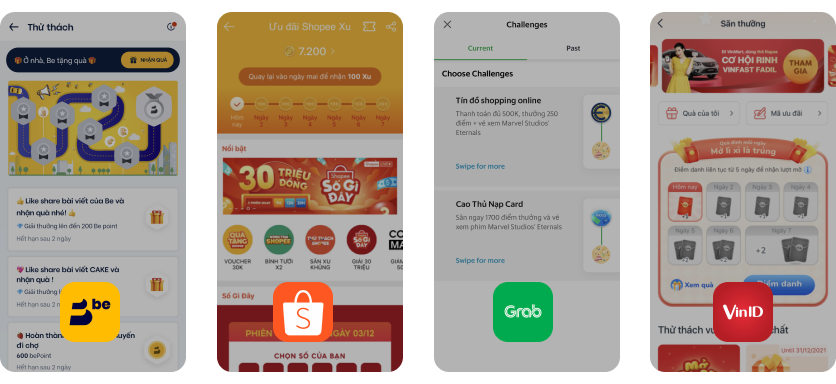
During our competitive review of local platforms such as Grab, Shopee, BE, and VinID, we discovered that while most of them had already introduced some form of gamification, the implementations were still relatively basic. The UI was functional but lacked emotional engagement, animation depth, and a true sense of progression.
Shopee offered multiple mini-games, but they felt generic and designed for mass usage rather than retention depth.
Grab and Be included daily check-in and challenges, yet the experience remained simple and utility-driven.
Among all competitors, VinID stood out as one of the few platforms that invested more seriously in gamified design and interactions.
This revealed a clear opportunity for Loship:
As a startup, we could differentiate by building a more polished, delightful, and visually engaging gamification experience — something that truly stands out instead of blending in.
By creating a more crafted system, Loship could increase daily engagement, form user habits, and position itself uniquely against competitors who were only offering surface-level gamification.
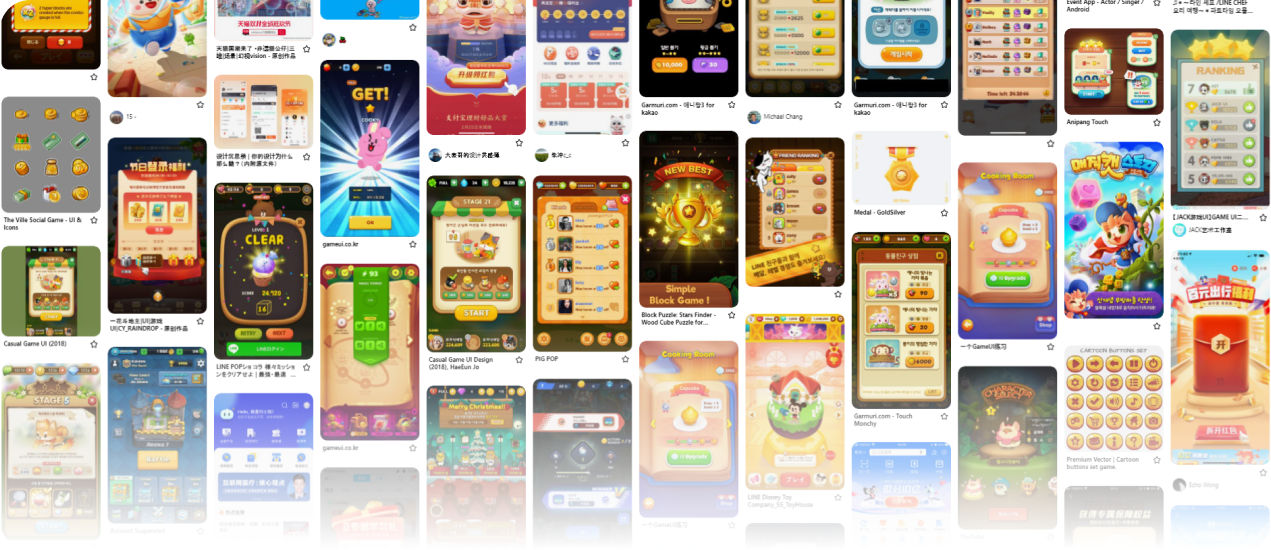
From this, I created a moodboard highlighting reward systems, color hierarchy, chest mechanics, micro-animations, and emotional cues to guide the art and interaction direction.
STRATEGY GOALS
Create a simple gamified loop that:
- encourages daily engagement,
- increases the sense of reward and progress,
- requires minimal engineering effort,
- is easy to scale later.
DESIGN GOALS
- Increase retention through daily interaction.
- Create anticipation with progressive rewards.
- Offer small quests that convert into real orders.
- Introduce a visual identity for gamification (chests, badges, animations).
THE SOLUTION
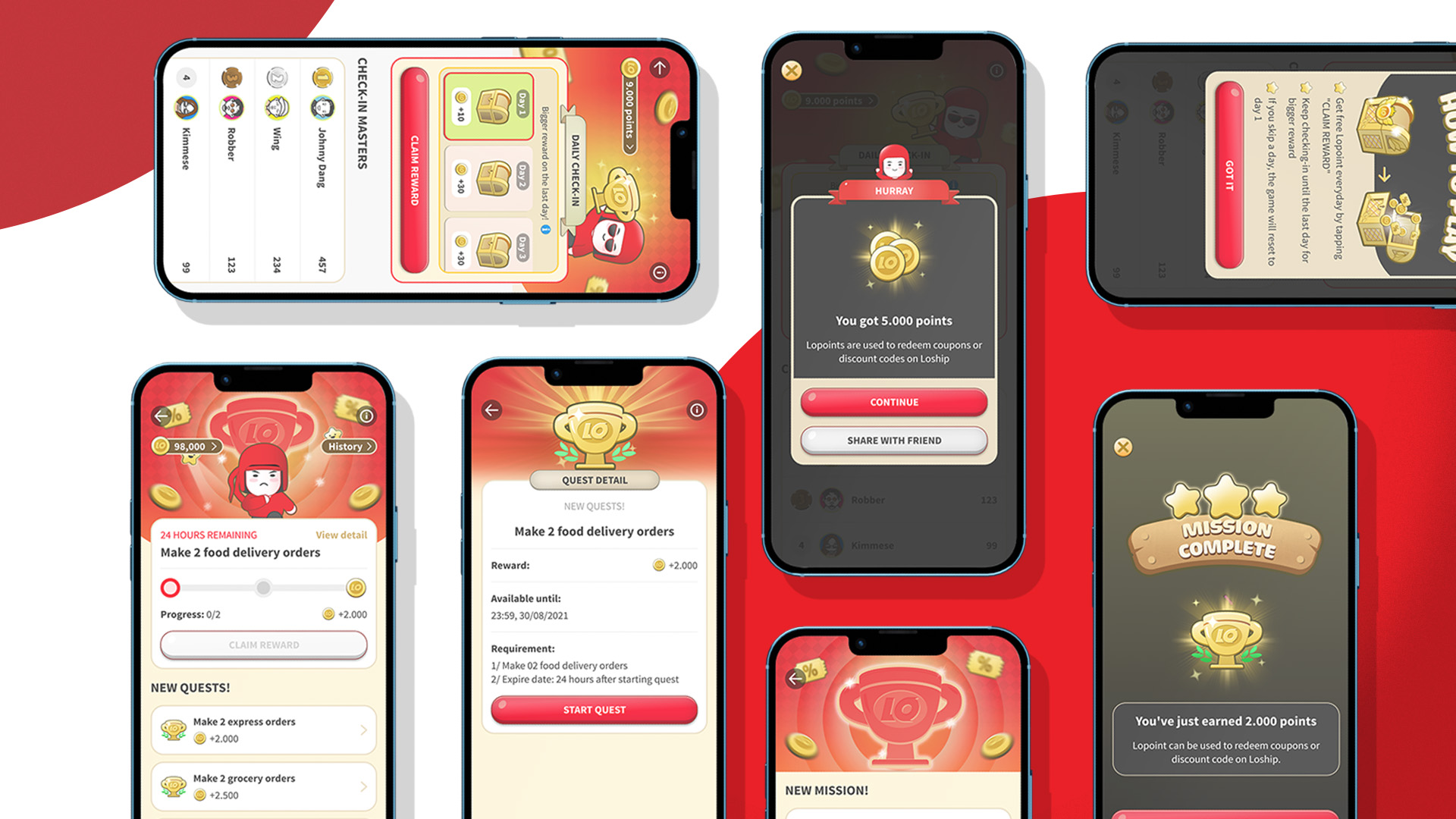
FEATURE 1 - DAILY CHECK-IN
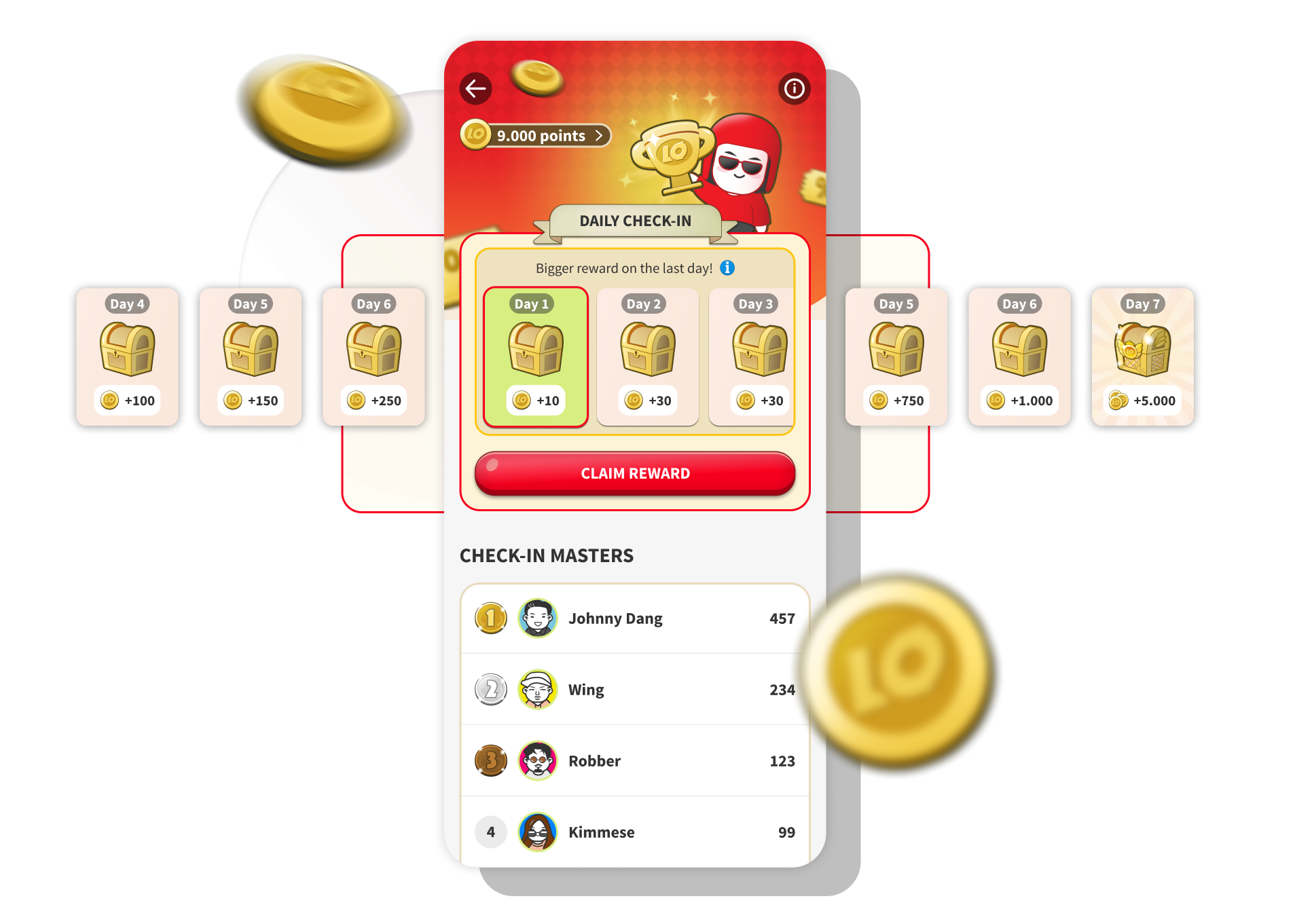
A 7-day streak with escalating rewards.
Day 1–6: Normal Chest (small coupons or points)
Day 7: Special Chest with a higher-value reward
The psychology behind the design:
- Users hate breaking streaks
- The big Day-7 reward encourages them to complete the cycle
- Light animations improve emotional satisfaction
This feature became the main driver of daily active users.
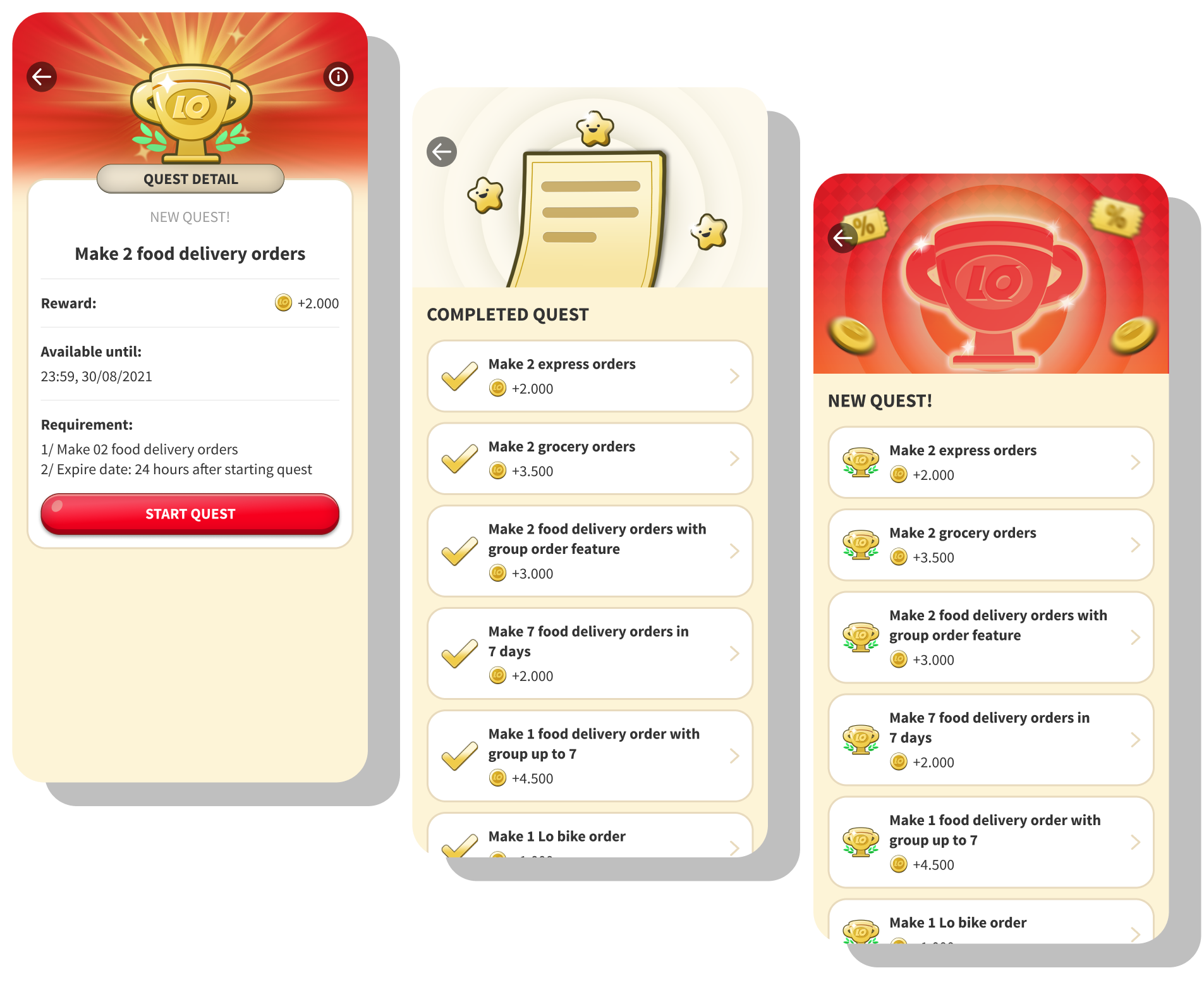
FEATURE 2 - QUEST SYSTEM
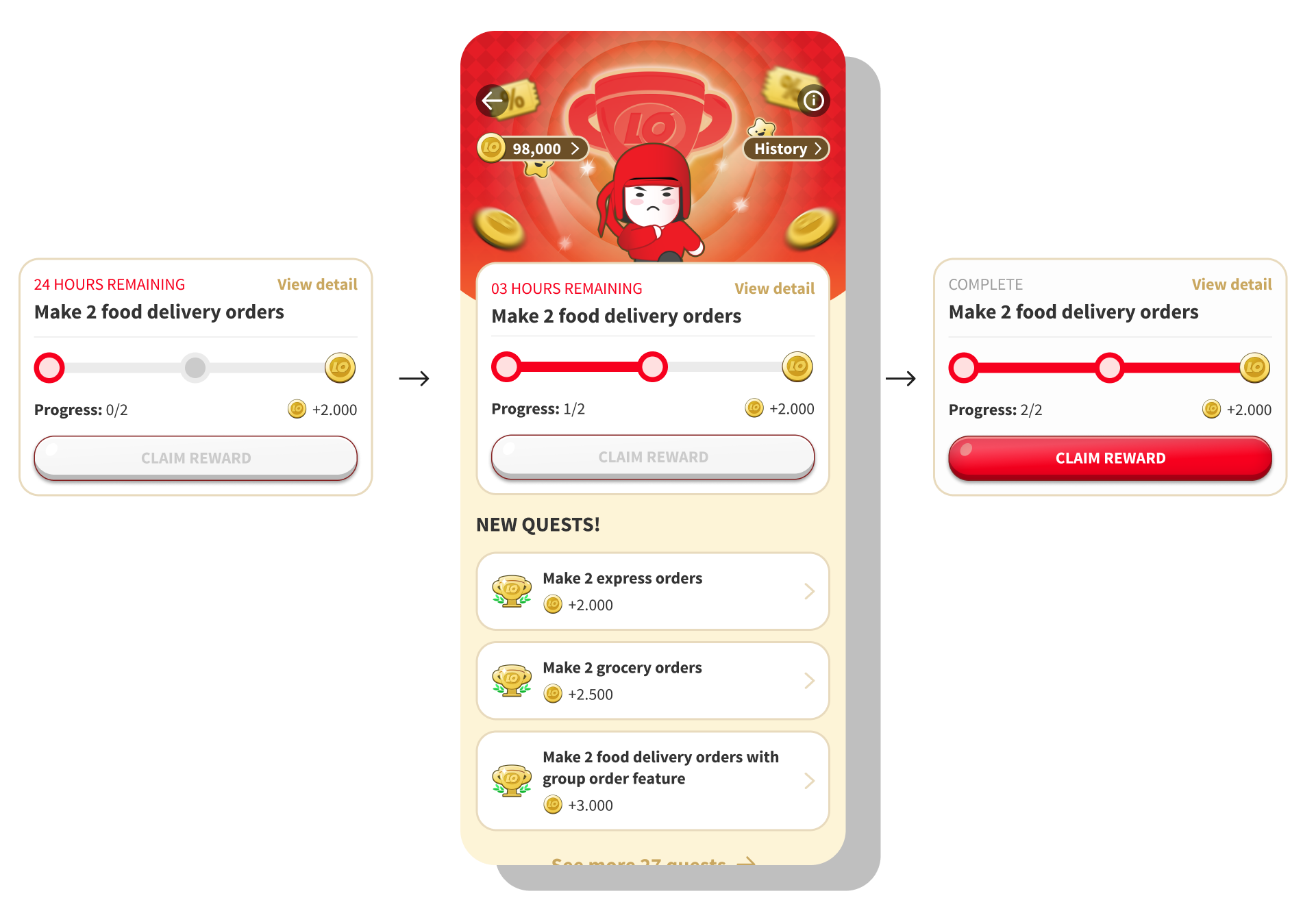
A simple, action-based mission board:
- Place an order over 100k
- Join a group order
- Order from a new restaurant
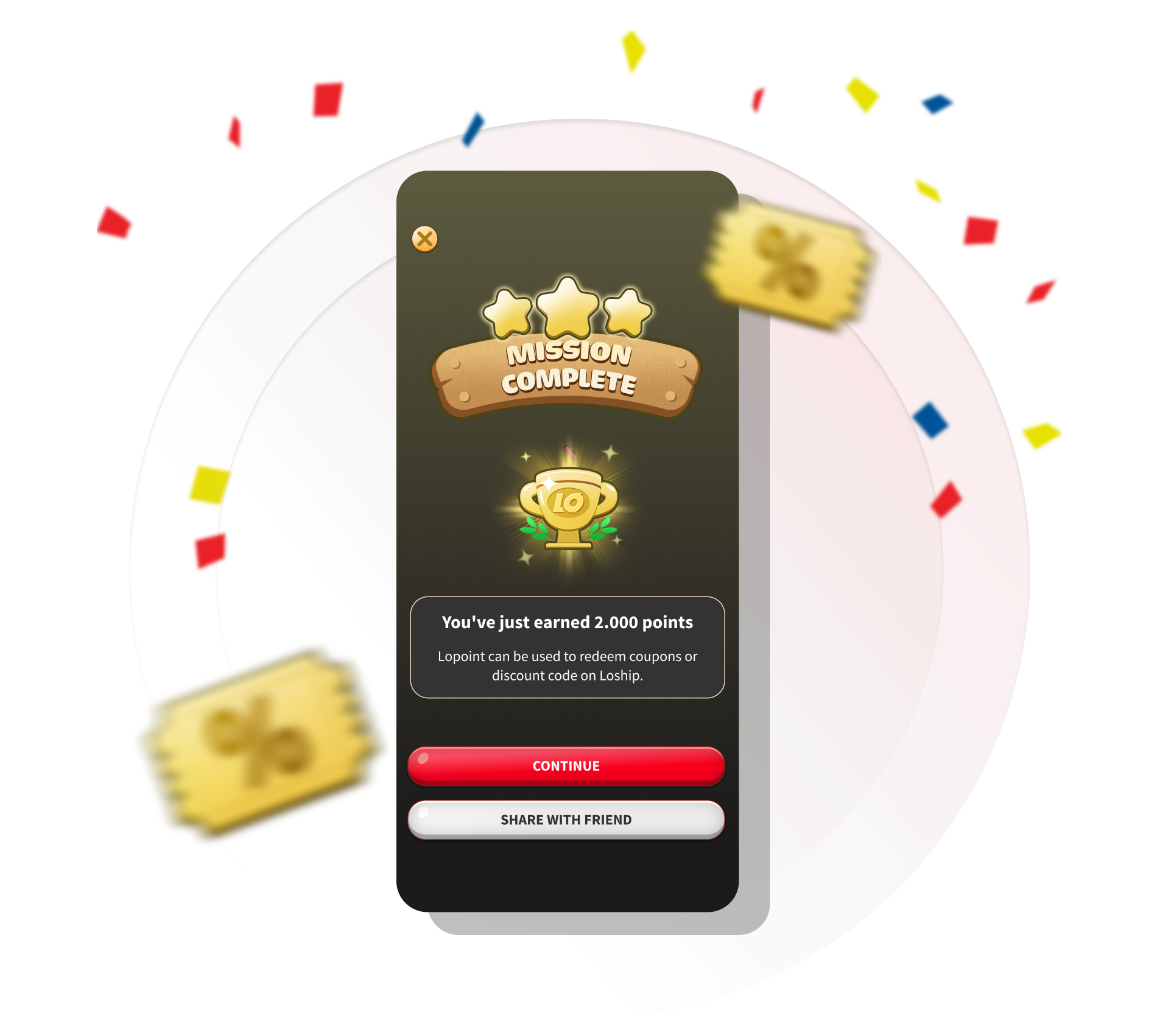
Each quest offered small rewards — enough to motivate but not enough to cause abuse.
Design principles:
- Clear goal → Clear reward
- Easy to complete → encourages repeated daily use
- Directly tied to business metrics (AOV, group orders, partner restaurants)
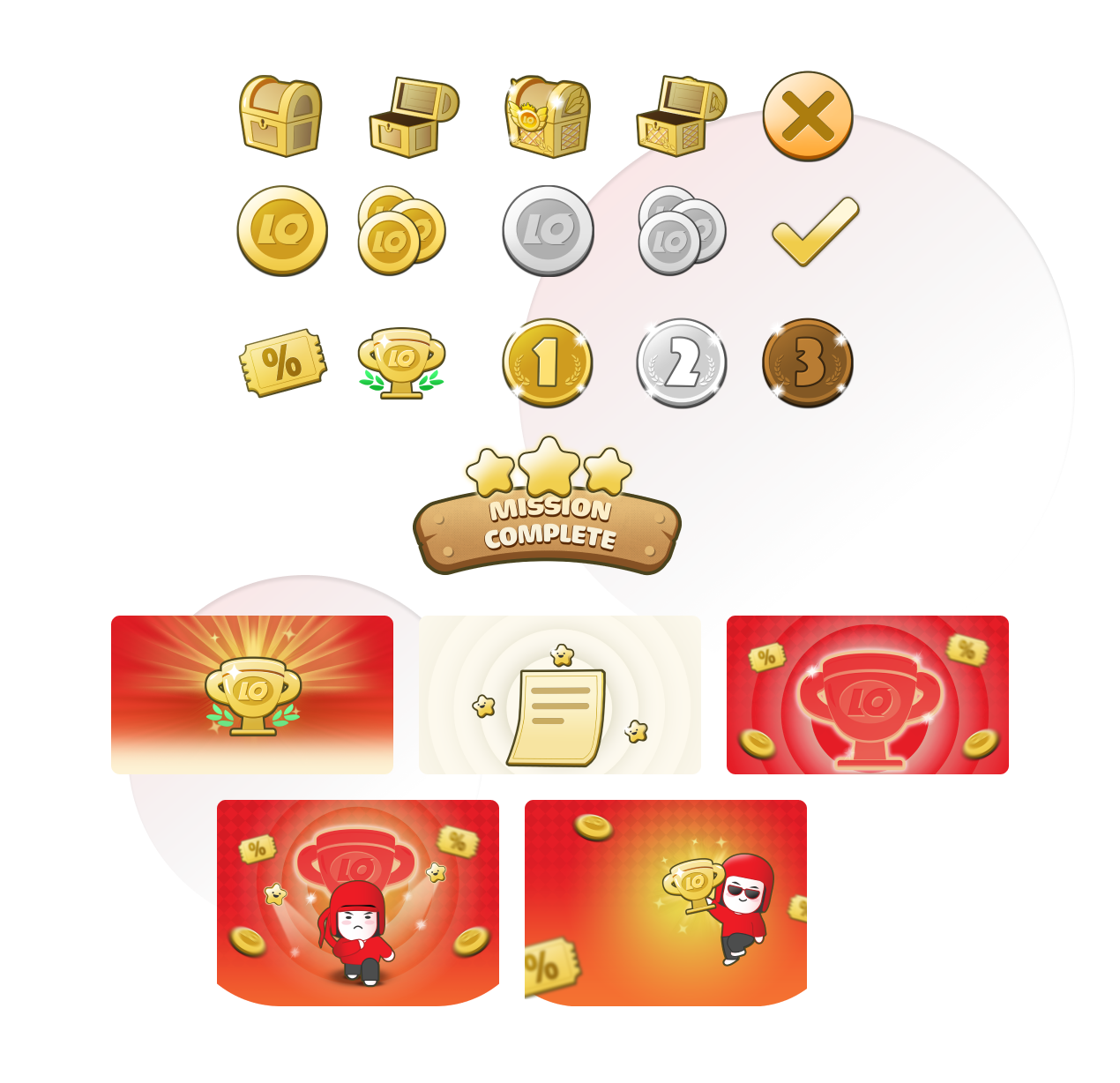
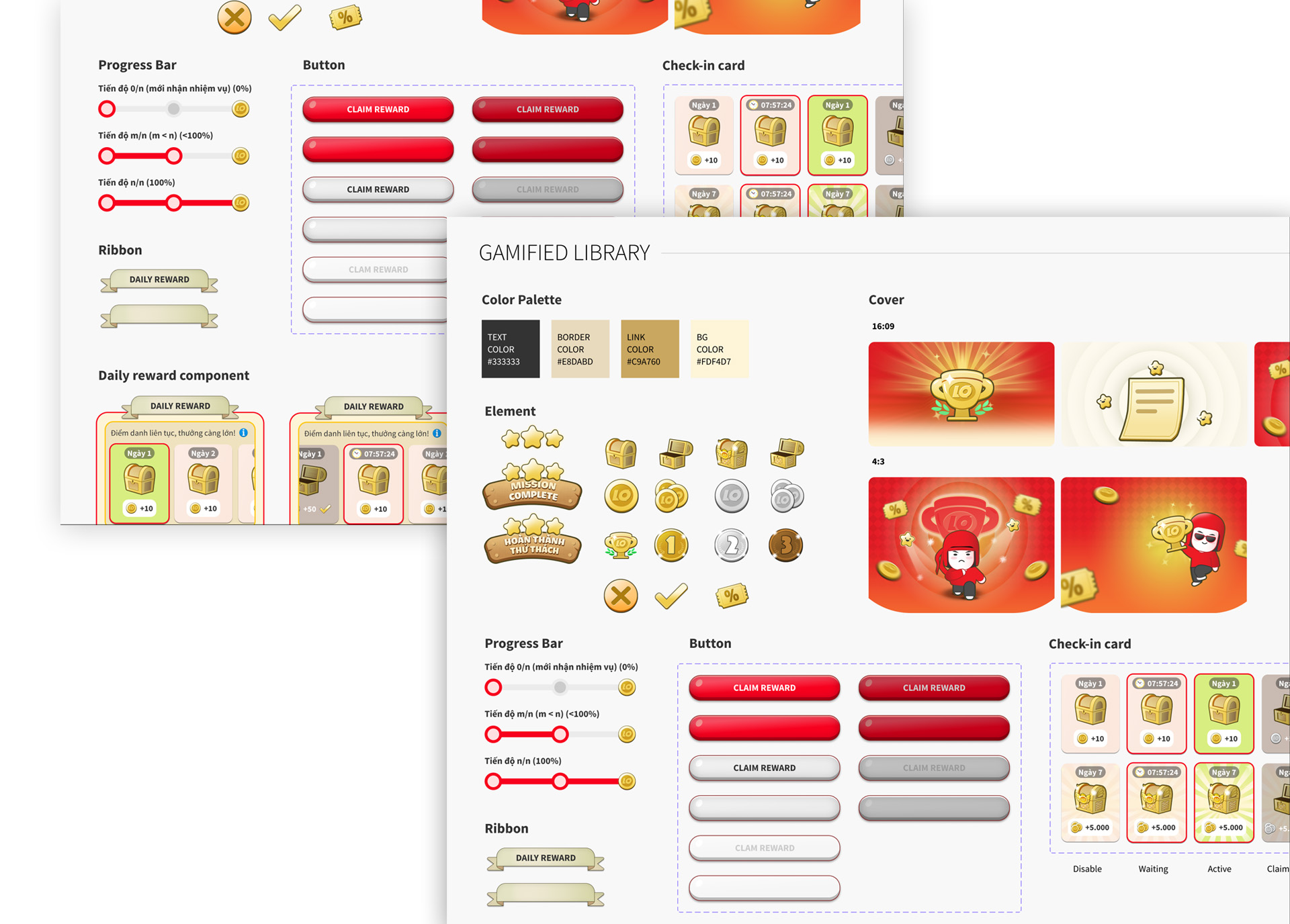
UI Library & Visual Direction
The visual style was intentionally clean, bold, slightly playful, ensuring it blended with Loship’s existing brand while creating a distinct “reward system” identity.
OUTCOME
Although lightweight, the feature delivered strong improvements:
- Increase in daily active users after launch (internal data)
- Higher order frequency from users who engaged with quests
- Positive feedback from users who enjoyed the predictability and fun element
- Validated potential for future seasonal gamification events
Most importantly, the gamification system shifted user behavior from transactional to habitual — a key competitive advantage in the food delivery space.
+84 903 308 166
CHEUNGJIAWING@GMAIL.COM
TELEGRAM_ @WINGCHEUNG0207
Get In Touch
LET’S BUILD WHAT PEOPLE LOVE TO USE.
DESIGN BY WING CHEUNG
HCMC, VIETNAM