
Reforged Labs - Building AI Products for Game Marketers (2023-2026)
PROJECT INFO
Year
Late 2023 - June 2026
Scope
Product Strategy
UX Architecture
AI Workflow Design
Internal Tools
Customer-specific Features
Interaction Design
Role
Founding Product Designer
Team
Founders
Engineering
Design
Product
Customer-facing Teams
OVERVIEW
Reforged Labs was a YC-backed AI startup building tools for game marketing teams to research, analyze, and create high-performing advertising creatives.
I joined at the end of 2023 as the founding designer, when the company was only four people: two founders, one engineer, and one designer.
Over the next two and a half years, the product evolved through multiple AI product directions — from AI-generated game concepts, to generative ads, to copilots, enterprise workflows, performance intelligence, and eventually autonomous AI work.
My role was to help translate each new product direction into clear workflows, usable interfaces, and shippable product experiences.
CONTEXT
When I joined, AI products were still trying to find their shape.
The market moved quickly. Every few months, a new expectation appeared:
First, AI should generate content.
Then AI should assist users.
Then AI should act like agents.
Then AI should run workflows autonomously.
Reforged Labs had to keep evolving with the market while searching for product-market fit.
This case study follows that evolution.
SELECTED WORK (2024 - 2026)
Instead of showing every version of the product, this case focuses on the pieces of work that best represent how Reforged Labs evolved: internal tools, business model experiments, AI Copilot experiences, enterprise workflows, workflow systems, and autonomous AI work.
WORKFLOW BUILDER (LATE 2025 - EARLY 2026)
Workflow Builder explored how AI could move beyond single tasks into repeatable systems.
Instead of treating every AI interaction as a one-off prompt, the idea was to help teams define steps, inputs, outputs, and logic around recurring marketing workflows.
FULL DEMO (TURN ON VOLUME TO HEAR THE PRESENTATION)
INTERACTION
Why it mattered
As the product became more complex, isolated AI features were no longer enough. The team needed a way to connect actions, structure processes, and make AI work feel more repeatable.
What I designed
Workflow creation experience.
Step-based workflow structure.
Input and output patterns.
Configuration flows for repeatable AI tasks.
Early concepts around AI marketing teams and agent-like workflows.
What this showed
Workflow Builder became the bridge between the copilot era and the agent/autopilot era.
It helped us think less about individual AI features, and more about systems of work: how tasks connect, how outputs move forward, and how users understand what the AI is doing.
BOA COPILOT (2025-2026)
Boa Copilot became one of the clearest expressions of the product during the copilot era.
The product shifted from generation-only tools into a more assistant-led creative workflow, helping game marketers move across creative research, ad inspiration, scripts, storyboards, briefs, and reporting.
ANALYZE
Why it mattered
Early AI chat experiences often started from a blank input box. But game marketers did not only need a place to chat. They needed structure, shortcuts, context, and outputs that connected back to their real creative process.
What I designed
Boa Copilot experience and core interaction patterns.
Shortcut-based workflows for common marketing tasks.
Ad inspiration, script generation, storyboard, and creative brief flows.
Reporting and creative analysis experiences.
Conversational UX patterns that made Boa feel more like a creative partner than a standalone chatbot.
What this showed
Boa taught me that AI assistants need structure. A chat box alone is not a workflow. Users need clear starting points, guided actions, useful outputs, and a way to move from conversation into production.
ENTERPRISE CUSTOM FEATURES (Late 2025 - 2026)
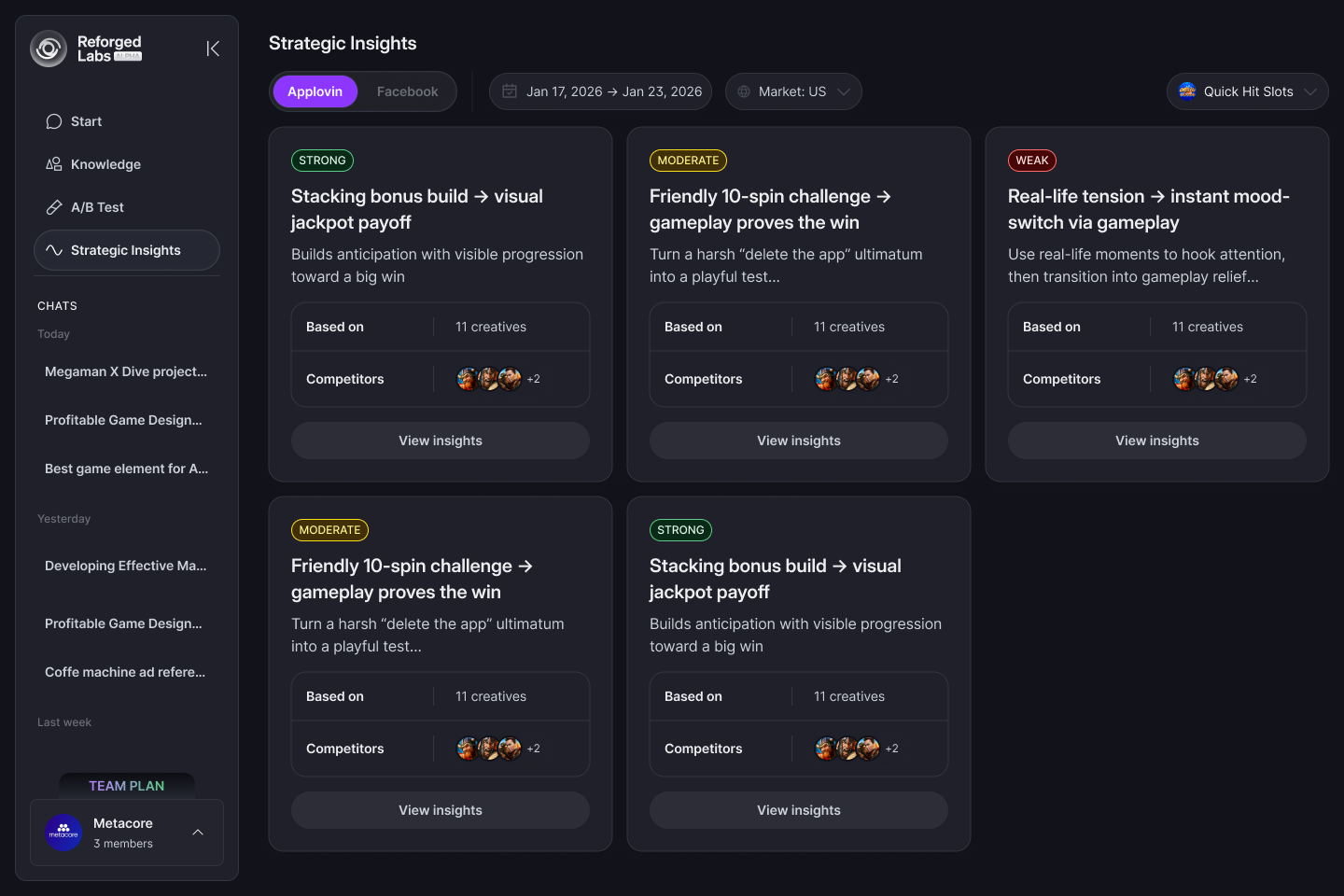
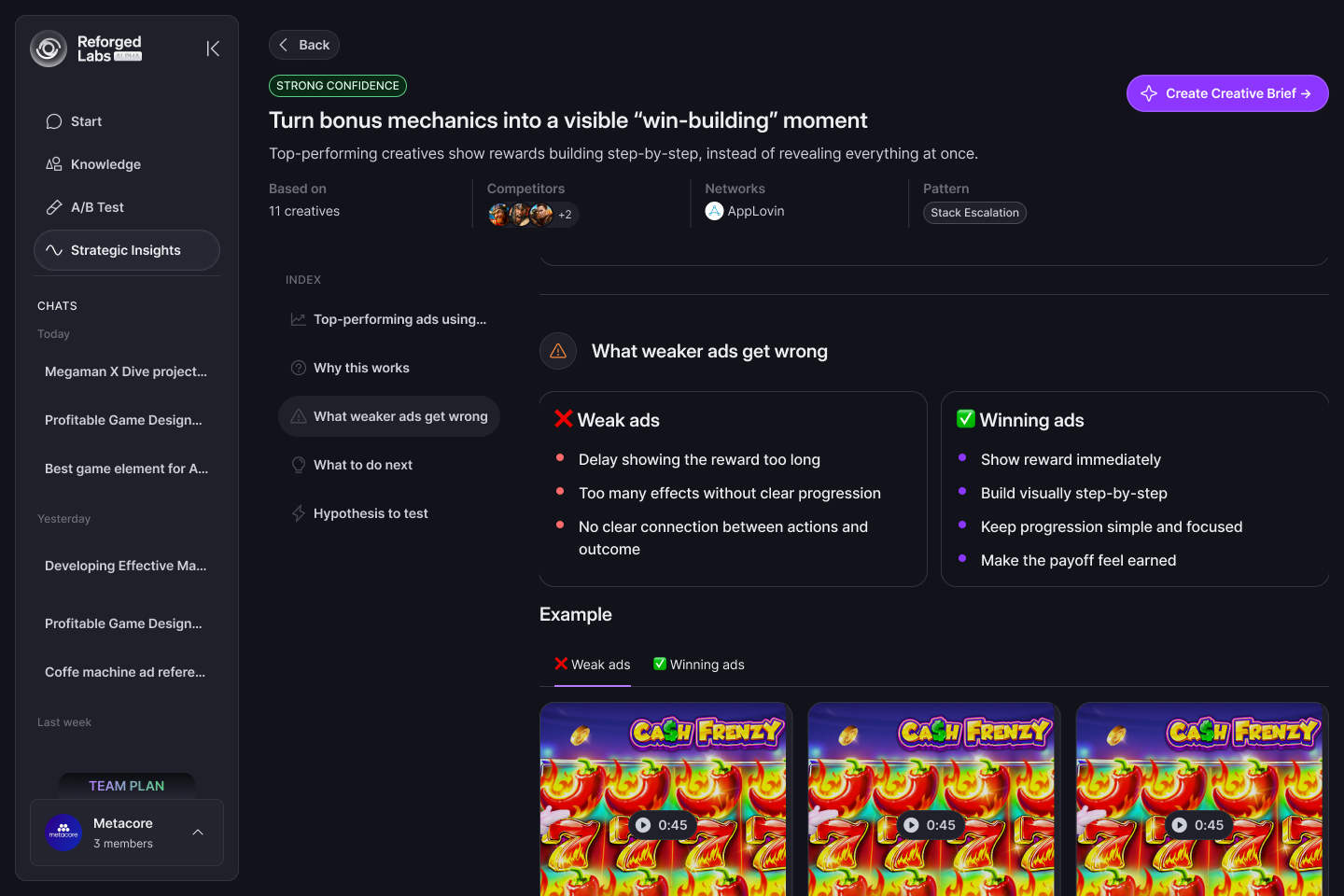
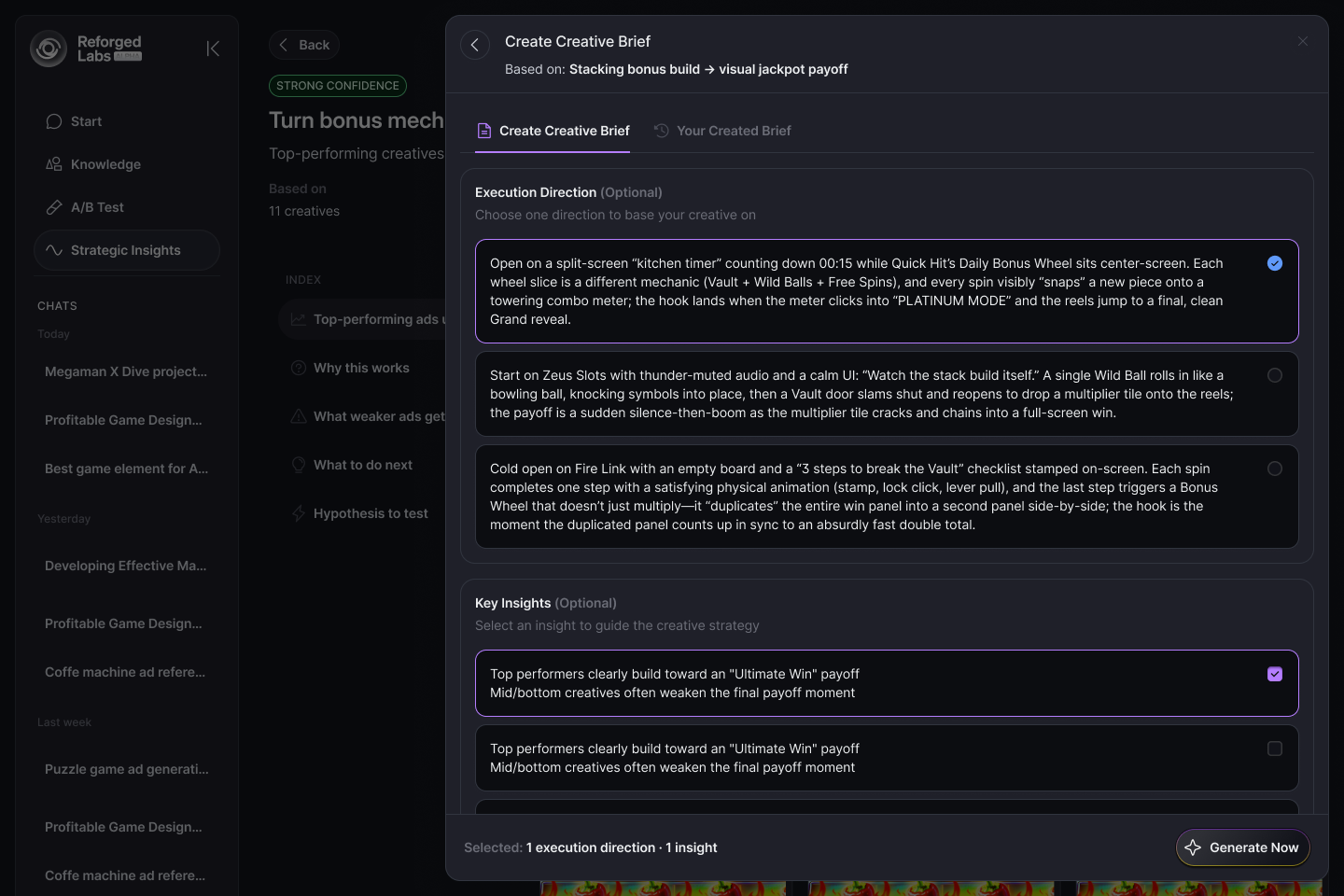
As larger game companies started using the platform, the product needed to support more specific creative operations.
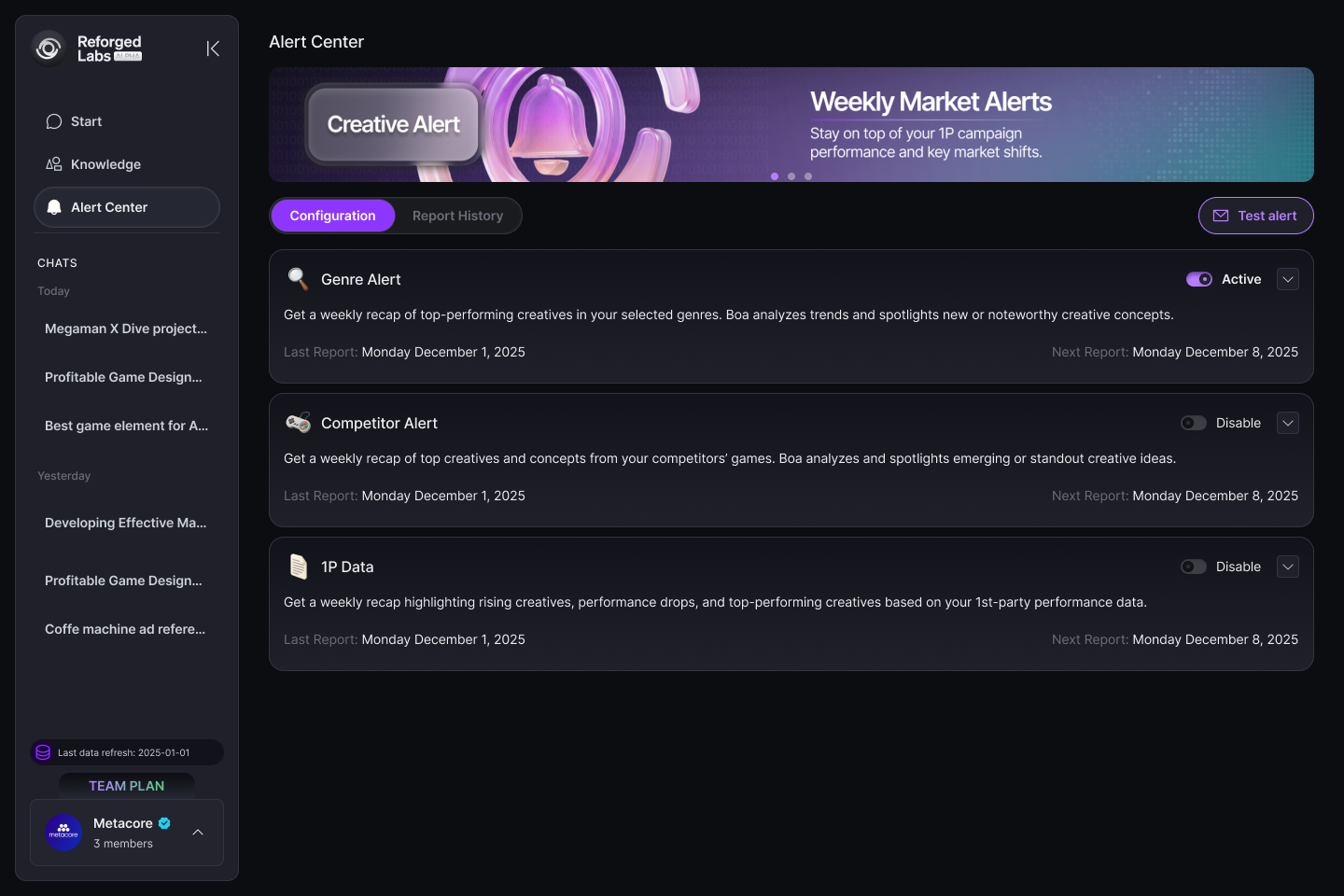
Different teams had different workflows. Some needed better ways to organize creatives. Some needed performance alerts. Some needed testing workflows. Others needed custom features around creative review, reporting, and decision-making.
This pushed the product beyond a generic AI copilot.
STRATEGIC INSIGHTS
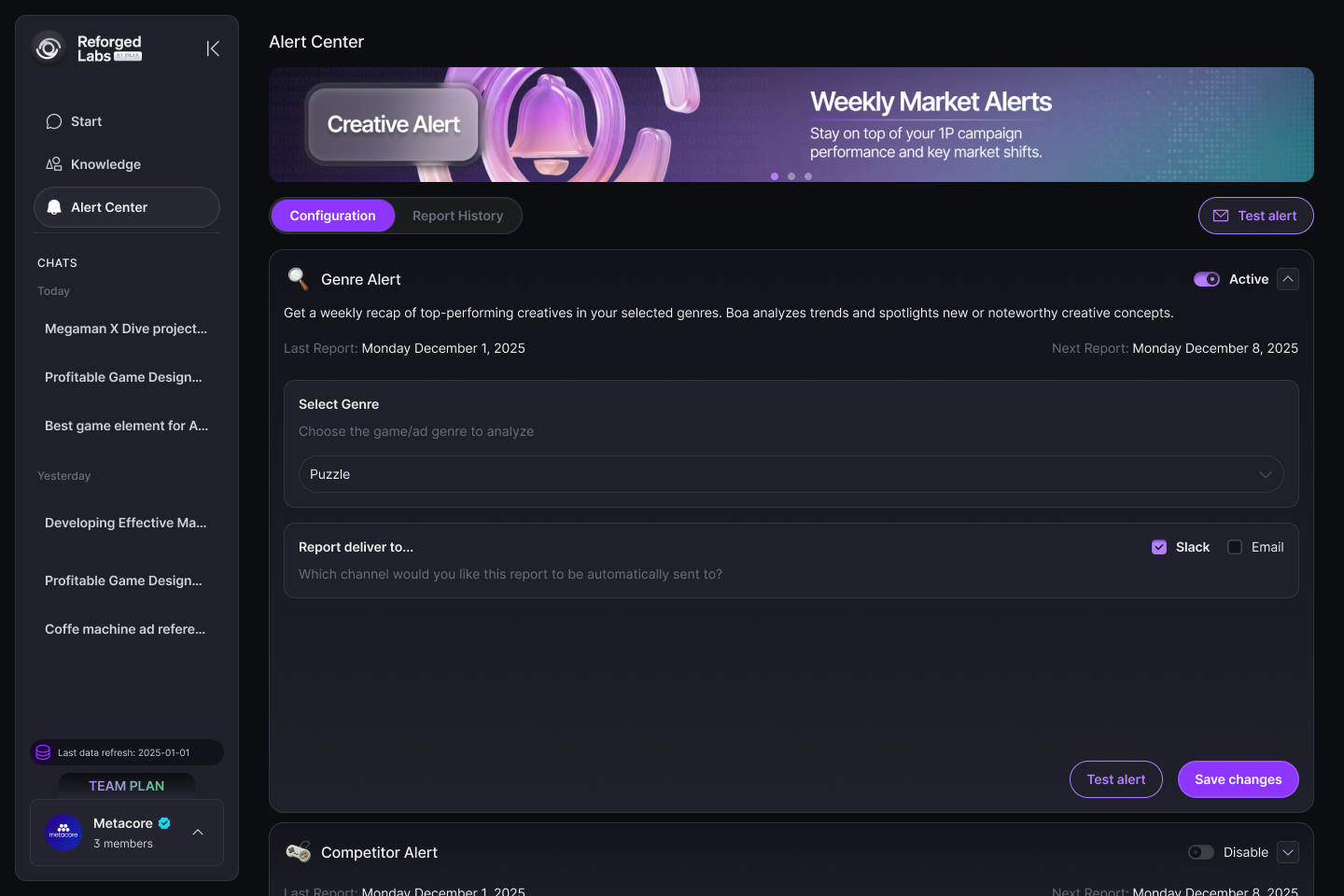
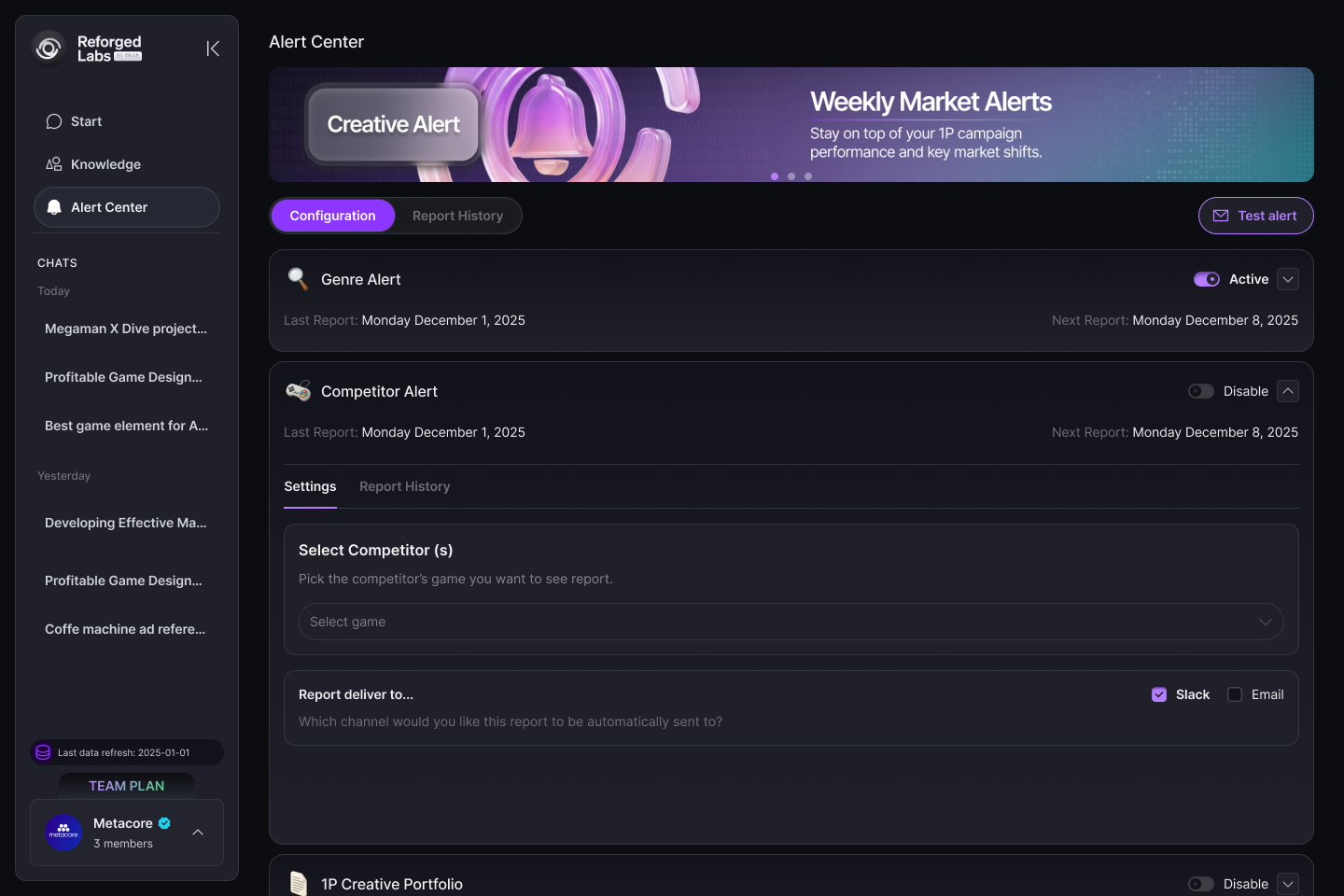
REPORT ALERT CENTER
Why it mattered
Enterprise teams do not only need AI outputs. They need repeatable systems for managing creative work across teams, campaigns, tests, and performance signals.
What I designed
Creative Matrix for organizing and comparing creative work.
Creative Inbox for managing incoming creative items and review flows.
Creative Alerts for surfacing important changes or signals.
A/B Testing workflows for comparing creative performance.
Customer-specific feature explorations based on real enterprise needs.
What this showed
This era reframed the product from “AI that generates things” into “AI that supports creative operations.”
The design challenge became less about making individual features look good, and more about creating structure around how game marketing teams actually work.
TEMPLATE STOREFRONT (LATE 2024 - EARLY 2025)
Storefront was a business model experiment.
Instead of asking users to generate everything from scratch, the idea was to package ad templates into a more transactional experience. Users could browse creative templates, choose the ones they liked, and request ad delivery from the team.
Why it mattered
At this stage, the company was still searching for the right commercial direction. Storefront explored whether AI-generated creative work could be sold more directly as templates, services, and deliverables.
What I designed
Template browsing experience.
Creative preview and selection flows.
Request and delivery experience.
UI patterns for turning creative assets into purchasable products.
What this showed
Storefront helped us test a more revenue-focused direction. It was not the final product direction, but it revealed an important question: should AI creative tools be sold as software, as services, or as packaged creative outputs?
INTERNAL LABELLING TOOL (2024)
Before Reforged Labs could build reliable AI-powered creative workflows, the team needed a way to organize and prepare data internally.
The Labeling Tool was designed to help the team review, classify, and manage creative assets used to support AI workflows behind the product.
Why it mattered
AI products are only as useful as the data and structure behind them. While the customer-facing product was still evolving, internal tools helped the team move faster, label creative patterns, and build stronger foundations for future AI features.
What I designed
- A structured interface for reviewing and labeling creative assets.
- Workflows for managing internal data operations
What this showed
This was one of the first places where I learned that AI product design is not only about the front-facing experience. Sometimes the most important design work happens behind the scenes, where internal tools help the product become smarter and more scalable.
OUTCOME & REFLECTION
Across 2.5 years, the work supported multiple product pivots and customer-facing experiences used or tested by 50+ game companies and studios, including Supercell, Ubisoft, Playtika, Scopely, Metacore, Wildlife Studios, Funstop, King, and others.
Reforged Labs went through multiple product pivots while searching for a sharper market direction. Across 2.5 years, the work shaped how I think about AI products: the hardest part is not making AI generate something — it is turning AI into workflows people can understand, trust, and actually use.
LEARNINGS
Early on, I thought the hard part was making AI produce good outputs. It wasn't. The hard part was making outputs fit into how people actually work — with deadlines, team reviews, and creative opinions.
The labelling tool taught me that AI product design starts before the user ever opens the app. If the data behind the model is messy, no interface can fix it.
When AI works in the background, users don't need more features. They need to know what's happening, why it's happening, and whether they can trust the result. Visibility is the product
+84 903 308 166
CHEUNGJIAWING@GMAIL.COM
TELEGRAM_ @WINGCHEUNG0207
Get In Touch
LET’S BUILD WHAT PEOPLE LOVE TO USE.
DESIGN BY WING CHEUNG
HCMC, VIETNAM